
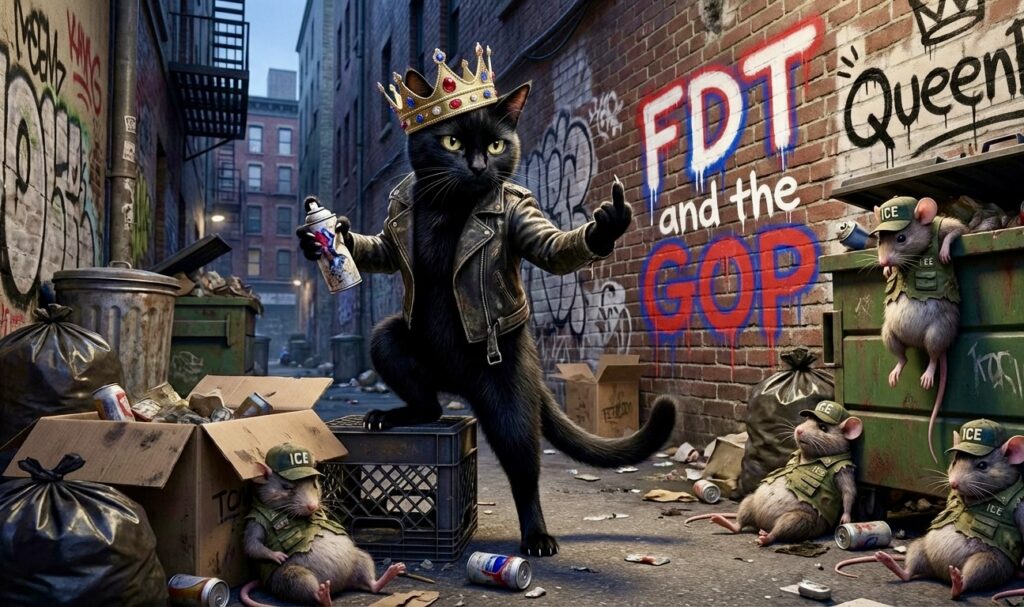
A politically charged hip-hop release from an anonymous New York City artist is beginning to draw attention for its message, timing, and unconventional approach to identity in music.
The artist, known only as Lucy Be, has quietly released a series of tracks across major streaming platforms, positioning the music at the intersection of protest music, anonymity, and emerging questions around artificial intelligence in creative work. With no public persona, no social media presence, and limited identifying information, the focus remains firmly on the music and the message behind it.
At a time when political tensions in the United States continue to dominate headlines, Lucy Be’s work raises a pointed question: why is there so little protest music emerging from mainstream hip-hop today?
According to a statement attributed to the artist, the decision to remain anonymous is deliberate. “I’m not interested in fame,” the artist says. “I don’t want anything bad to happen to my family or friends because of my art.”
The sentiment reflects a broader concern that has long surrounded politically outspoken artists; the potential personal and professional risks associated with taking a public stance. While protest music has historically played a central role in hip-hop culture, particularly in its early decades, many observers argue that the genre has shifted toward more commercially driven narratives in recent years.
Lucy Be’s music appears to challenge that shift.
“This is what hip-hop’s about. The voice of the streets,” the artist states. “Someone needs to do something about what’s going on in our country, and this is my way of doing that.”
The project is being released incrementally, with one track scheduled per week, building toward a 13-song body of work. This serialized approach allows each release to stand independently while contributing to a larger thematic narrative centered on political awareness, identity, love and public discourse.
Anonymity as Strategy and Statement
In an industry heavily driven by branding and personal visibility, anonymity is an uncommon strategic choice, potentially allowing for more artistic freedom and choice. There’s also something deeply enchanting about anonymity.
By withholding identity, Lucy Be removes the influence of image, background, and public perception, allowing listeners to engage directly with the content. The approach also introduces an element of intrigue that has historically contributed to audience engagement in similar cases.
“I want the songs to speak for themselves and live on their own,” the artist explains.
The anonymity also reinforces the project’s central positioning: that the music represents a broader collective voice rather than a single individual perspective. In this sense, Lucy Be is less a personality and more of an unnamed voice reflecting shared concerns of the people.
The Role of AI in Modern Music Creation
Beyond its political themes, the project is also contributing to an ongoing industry conversation about the role of artificial intelligence in music production.
While most of the lyrics are written by the artist, AI tools have been used in aspects of each song’s composition. This hybrid approach reflects a growing trend across the music industry, along with the art world in general, where technology is increasingly integrated into the creative process.
“I create music using different tools and instruments from whatever’s around,” the artist notes. Lucy Be also admits to being heavily influenced by iconic art from the past, that now lives in the public domain, including classic poetry, various Jazz standards and spiritual hymns, that have been re-mixed as part of the project and states “These pieces are a part of us all, but it’s up to us to keep them alive.”
The use of AI raises questions about authorship, authenticity, and artistic value topics that have become more prominent as AI-generated content becomes more widespread. According to industry estimates, a significant and growing portion of music released on streaming platforms now involves some level of AI assistance. For listeners, however, the distinction is not always clear. Is the use of AI harmful, or is it just another tool for creative freedom?
If the emotional impact of a song remains intact, some argue that the method of creation becomes secondary. Others maintain that transparency is essential in preserving artistic integrity.
Lucy Be’s project does not attempt to resolve this debate. Instead, it positions itself within it.
Latest Release
The artist has officially released a new track, titled “To Be” described as a more playful, but compelling track, the song includes the line: “I’m a reflection of you.”
The lyric suggests a shift in perspective from artist to audience, implying that the work itself may function as a mirror of collective thought and emotion. It also reinforces the ambiguity surrounding identity, both human and artificial.
The question of whether Lucy Be is a traditional artist, a technologically augmented creator, or a combination of both remains intentionally unanswered.
A Broader Cultural Context
The emergence of Lucy Be’s project comes at a time when discussions around political expression, media influence, and technological disruption are increasingly intersecting.
Historically, protest music has played a role in shaping public opinion and amplifying social movements. From civil rights-era anthems, to anti-war folk, to politically driven hip-hop of the 1980s and 1990s, artists have often served as cultural commentators.
In recent years, however, critics have pointed to a perceived decline in overt political messaging within mainstream music. Whether due to industry pressures, audience fragmentation, or broader shifts in media consumption, the space for protest-driven content appears to have narrowed.
Lucy Be’s work enters that gap directly.
By combining political commentary with modern production techniques, the project reflects both a return to foundational hip-hop principles and an adaptation to contemporary creative tools.
Audience and Impact
The intended audience for the project extends beyond traditional music listeners, targeting individuals engaged in political and cultural discourse, as well as those interested in the evolving relationship between art and technology.
From a system that practically demands that a face be attached to a brand, before you’re allowed to be an artist, the lack of a visible artist identity may also broaden its reach, allowing listeners to interpret the work without preconceived bias.
At its core, the project poses several interconnected questions:
- Can protest music still influence public conversation and change?
- Does anonymity strengthen or weaken artistic impact?
- And in an era of AI-assisted creativity, what defines authenticity?
While definitive answers remain elusive, the discussion itself is central to the project’s purpose.
About the Artist
Lucy Be is an anonymous hip-hop artist based in New York City, USA. The project focuses on politically driven music exploring themes of protest, identity, love, and the role of technology in creative expression. Releasing one track per week, Lucy Be is building toward a 13-song project available on major streaming platforms including Spotify, Apple Music, Amazon Music and YouTube.
Media Contact
Lucy Cat Records
Email: [email protected] Location: New York, NY, USA
Notes To Editors
This press release is about an artist who chooses anonymity over fame so that her art may speak for itself - pure and simple. It's also about modern day art in general and how it's defined as many artists are utilizing AI as a tool for their artwork. How is this modern way of creating art defined and does it even matter if people enjoy the final product? Many of these questions are currently left unanswered, as we all navigate this new world.